How Coins were Made
Hammering
Before modern coin presses, most coins were made by hand through a process known as hammer striking. A prepared metal blank, or flan, was placed between two engraved dies. The lower die carried one side of the design, while the upper die carried the other. A mint worker then struck the upper die with a heavy hammer, forcing the metal to spread and fill the engraved designs.
This method was used across the ancient and medieval worlds, from Greek and Roman mints to medieval European kingdoms and Islamic states. Each blow could produce a slightly different result: designs might be off-center, details could be uneven, and the force of the strike could leave characteristic marks around the edge. Despite its simple appearance, skilled workers could produce thousands of coins through coordinated, repetitive labor.


Casting
Unlike struck coins, cast coins were formed by pouring molten metal into molds. Craftsmen prepared a mold containing impressions of the desired coin designs, then poured heated bronze, copper, lead, or other metals into the cavities. Once cooled, the cast pieces were removed, separated, and finished for circulation.
Casting was especially important in regions where large quantities of low-value coinage were needed. In ancient China, for example, molds could be arranged in elaborate networks, allowing many cash coins to be produced at once. The coins were often connected by channels of metal, forming a distinctive “coin tree” that was broken apart and trimmed after casting.
The technique could produce thousands of nearly identical coins in a single operation, making casting particularly suited to standardized currency. Marks left by the molds, casting seams, and finishing process can still be seen on surviving specimens, providing a physical record of how they were made.

Milling
From the Renaissance onward, European mints increasingly adopted the screw press, replacing the hammer with a mechanical system that delivered a powerful, controlled blow. A prepared metal blank was placed between two engraved dies, and a large screw-driven arm forced the upper die downward onto it. The process's greater consistency allowed mints to produce coins with sharper, more uniform designs and greater precision.
Milling also transformed coin production. Coin blanks could be rolled to a consistent thickness, cut into precise shapes, and finished at the edges before striking. Some coins received lettering, patterns, or reeding around their edges, making it more difficult to remove precious metal from them secretly. Together, screw presses and milling marked an important transition toward the standardized, highly controlled coinage systems that would eventually lead to modern minting.
Striking
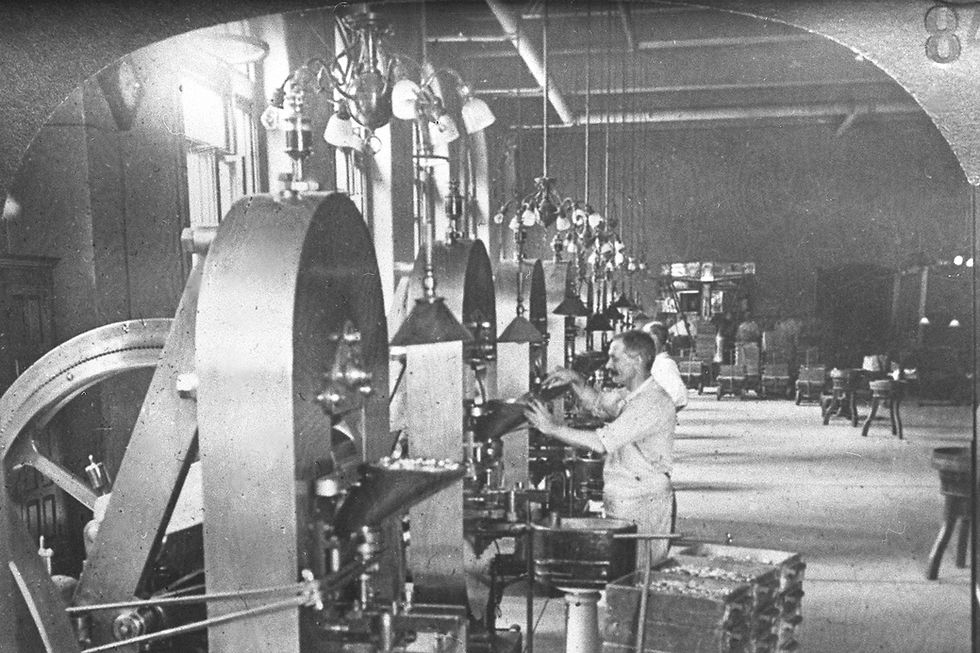
Modern coins are produced using powerful, highly precise coin presses capable of striking hundreds of coins per minute. Metal is first rolled into sheets of carefully controlled thickness, then punched into uniform blanks. These blanks are often heated or softened, cleaned, and prepared before being fed automatically into the press.
Inside the press, each blank is positioned between an obverse and reverse die. Enormous pressure forces the metal to flow into the engraved designs, creating the coin's relief in a single, controlled strike. Modern presses can apply tremendous force while maintaining remarkable consistency, allowing millions of coins to be produced with nearly identical dimensions, weight, and design.
After striking, coins are inspected for defects and counted before being packaged for distribution. Modern minting combines centuries-old principles of striking with precision engineering, automated machinery, and rigorous quality control—turning raw metal into standardized currency on an industrial scale.